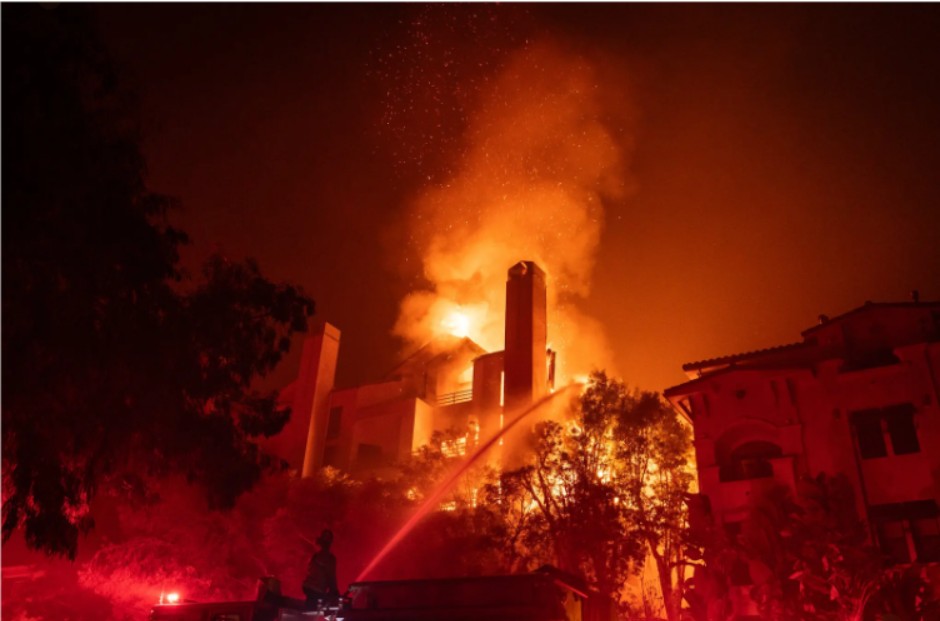
Why is California, the state with the largest economy and best equipped to deal with wildfires, visibly struggling to prevent blazes from consuming entire chunks of America's second-largest city? America is considered to be one of the most developed nations in the world, yet climate change and climate-based injustice trouble American citizens. Healthcare and insurance also fall short of covering the damages caused by the wildfires. California’s Wildfire Crisis: A Struggle Against the Flames Over the past month, devastating wildfires have swept through large parts of Los Angeles, leaving destruction in their wake. This disaster has cost many people their family's homes, livelihoods, and millions of dollars worth of property. Climate change played a significant role in California's increasing frequency and intensity of wildfires. As temperatures rise and droughts persist, the LA wildfires pose a major health risk for citizens as they result in chronic smoke exposure not only to those residing in California but also to areas nearby. On 24 January 2024, the death toll rose to 28. Citizens were warned to brace themselves for “72 hours of hell” by the city sheriff. Climate change is a crisis causing more and greater destruction that is yet to be addressed by lawmakers and other leaders, not only in America but also worldwide. Analysts believe that the LA fires have caused the most economic damage in the history of the US. JP Morgan analysts estimated that uninsured losses could exceed $100 billion. The “developed” label often leads to the false belief that developed countries are immune to environmental risks. During a press call, White House Climate National Advisor Ali Zaidi said, “Development status does not grant any country climate-haven status. Just because the U.S. has the world's biggest, most prosperous economy does not mean climate risk stops at our borders. In our communities, no place is impervious to this risk. All of us are on the hook to step up in a big way.” From Homes to Ruins: Climate Injustice in the Aftermath Thousands of homes were reduced to ash and rubble; firefighters watched helplessly as houses burned, unable to hose the fires down due to the imminent water shortage. Thousands of citizens had to evacuate their homes and were forced to leave their belongings behind, only to find everything ruined. This devastation underscores the harsh reality of climate injustice as marginalised communities are often forced to bear the brunt of climate-induced disasters, such as wildfires. Disproportionate access to mitigative resources and infrastructure further amplifies their vulnerability. The Palisades neighbourhood of Los Angeles on Thursday. Loren Elliott for The New York Times The Palisades neighbourhood of Los Angeles on Thursday. Loren Elliott for The New York Times The burden of the economic losses caused by wildfires is inequitably carried by low-income citizens. Without sufficient financial nets, these individuals struggle to build their lives back up after such natural disasters, especially if it results in major property loss and job displacements. Slum areas are vulnerable to destruction, and such setbacks further exacerbate homelessness and housing insecurity in the region; placing more pressure on economically disadvantaged individuals. Historically, land-use policies have often placed marginalised communities in environmentally hazardous areas. Often, land prone to environmental damage is sold at cheaper rates, thus making it affordable for people from low-income backgrounds and exposing them to dangerous environmental conditions. In California, developers often build mobile home parks and budget housing in areas prone to wildfires, such as the Wild-fire Urban Interface (WUI), to minimise costs. People living here are exposed to a higher risk of harsh conditions and rash consequences of wildfires. Moreover, people residing in these areas often lack the resources to pay for mitigation, such as purchasing fire insurance or even fire-resistance instruments. This makes their homes additionally vulnerable to extensive damage and destruction. Further, outdoor workers are often exposed to wildfire smoke, and pregnant women may also face potential impacts on foetal development, which often leads to higher chances of premature or low-birth-weight babies. The Human Cost of Wildfires Humanity’s strained relationship with nature is exemplified through climate change. Global warming is causing greater destruction, with the atmosphere choking on greenhouse gases, as temperatures keep steadily rising, extreme weather swings will continue to become increasingly frequent and volatile. Meanwhile, policymakers grapple with the challenges of addressing climate crises and the resultant injustices that disproportionately affect vulnerable citizens. The amount of damage, deaths and injuries caused by wildfires should be considered as a warning; there is still time to take mitigating action against aggressive climate change and the widespread damage that it has caused. This disaster cannot simply be blamed on foresight or lack of supplies; while these factors may have played a role, the underlying causes are rooted in years of insufficient action against the dangerous consequences of climate change, unregulated urban development and inequitable distribution of resources. Thousands of lives have been uprooted all over Los Angeles, as people grieve and struggle to find a solution in the ashy debris of uncertainties. We, as a community, need to wake up to nature’s alarming wake-up call and urgently work towards implementing policies and putting in place protocols that help us both reduce the likelihood of more such crises and minimise the death and destruction when they ultimately do occur. Image Source: Firefighters battle the Palisades Fire in Los Angeles, Calif., on 8 January 2025. Public domain photo by CAL FIRE.
05 Feb 2025
Keya Waghmare


